How Bones and Skull Uses Allegory to Explore Life’s Cyclical Nature and the Concept of Redemption
Robert Antrim Calwell’s Bones and Skull: The Book of Meditations is a deeply evocative exploration of life, death, and the cycles that govern human existence. Through the use of rich allegory, the manuscript draws readers into a timeless world where themes of loss, hope, and redemption are interwoven with vivid imagery and metaphorical landscapes.
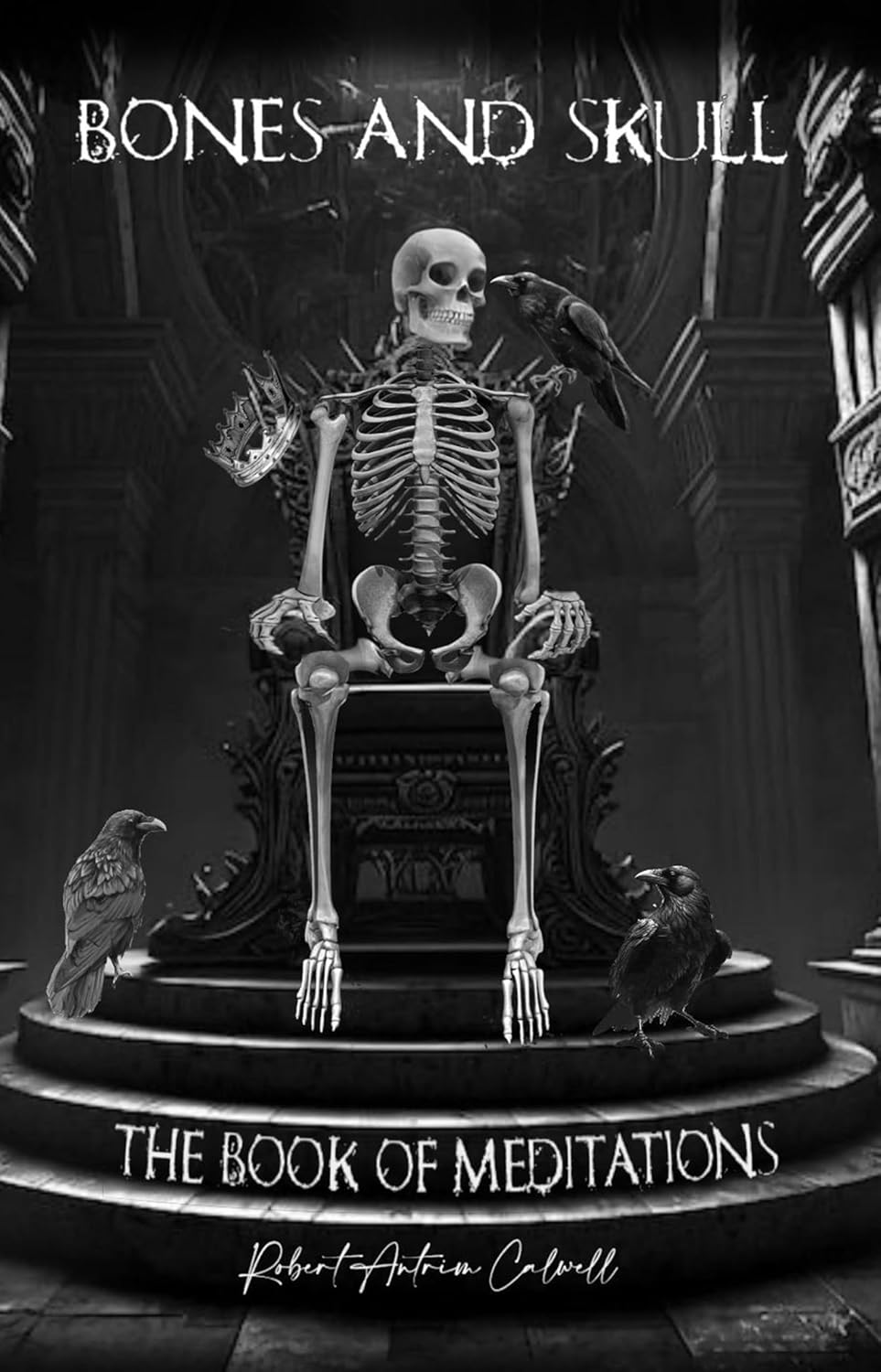
One of the most striking allegorical elements in the book is the narrative surrounding Weaver’s Mountain and Teardrop Falls. These mythical locations serve as a stage for the eternal dance between innocence and guilt, life and death, and ultimately, redemption. The mountain itself becomes a living symbol of the burdens and trials faced by humanity, while the falls represent the cleansing and renewal offered through acceptance and understanding. The recurring motif of the hanging dwarf crocus—flowers born from the transformation of lost children—stands as a poignant reminder of the beauty that can emerge even from tragedy.
The allegory in Bones and Skull is cyclical, emphasizing the eternal nature of human struggles and triumphs. The character of Bones and Skull, who acts as both observer and participant in the events at Weaver’s Mountain, reflects the universal human journey. In the climactic scenes, Bones and Skull winds up the twine left by the Weaver—a symbolic act that speaks to the idea of weaving together fragments of broken lives and finding meaning amidst chaos.
The text also draws heavily on the allegory of redemption through the actions of the Children, who confront the malevolent Weaver. Their decision to reclaim their world by destroying the Weaver is not only a literal act of survival but also a metaphor for confronting and overcoming personal and collective guilt. The transformation of the Weaver into twine and rope, and of Edgar into a flower, encapsulates the duality of destruction and rebirth.
Calwell’s use of allegory extends to the smaller, lyrical pieces interspersed throughout the manuscript. Poems like Angel’s Teardrops and As Heaven Returned to Teardrop Falls echo the larger narrative, depicting moments of individual reflection that mirror the collective journey of the characters. The refrain of “Severed dreams are held in Heaven” captures the idea that brokenness can lead to spiritual restoration.
Ultimately, Bones and Skull serves as a testament to the power of allegory in poetry. By using symbolic landscapes and characters, Calwell allows readers to see their own struggles and hopes reflected in the narrative. The cyclical nature of life—its sorrows and redemptions—is brought vividly to life in this meditative masterpiece, reminding us all of the resilience and beauty that define the human spirit.