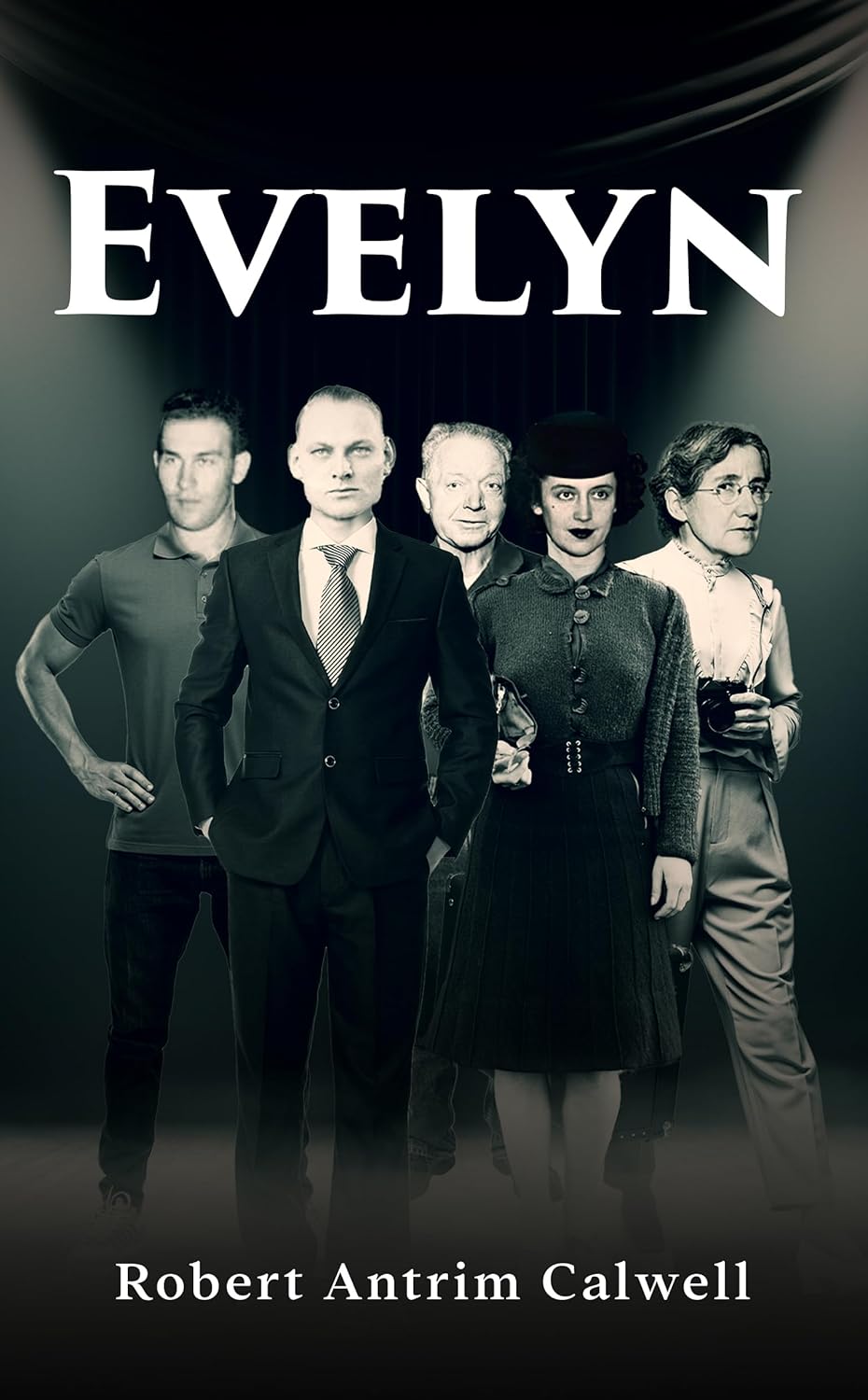
What happens when the justice system struggles to balance truth, evidence, and public opinion? Few Canadian cases highlight this tension as sharply as the story of Evelyn Dick. In 1946, the discovery of John Dick’s dismembered body near Hamilton’s Albion Falls shocked the country and placed Evelyn at the center of one of the most infamous trials in Canadian history. Robert Antrim Calwell’s book Evelyn revisits this case, offering readers a poetic retelling that reveals how questions of justice and injustice shaped the outcome.
The case began with gruesome evidence. Children hiking near Albion Falls discovered John Dick’s torso, and investigators later uncovered ashes, bone fragments, and teeth at Evelyn’s home. These findings seemed to point in a clear direction. However, as the investigation unfolded, mistakes and procedural gaps would create lasting doubt. Mishandling of evidence, conflicting statements, and sensationalized reporting blurred the line between fact and rumor.
One of Evelyn’s stories’ strongest examples of injustice is how evidence was collected and presented. Investigators tied Evelyn to her husband’s death through circumstantial details and testimony that did not always hold up under scrutiny. Tools and traces of ash were used to build a picture, but the proof chain was not always secure. This weakness gave Evelyn’s defense team grounds to challenge her conviction, and eventually, her death sentence was overturned on appeal.
Public opinion also played a powerful role. Evelyn’s appearance, relationships, and reputation as a young woman who moved in circles of wealth and attention made her an easy, scandal-prone target. Newspapers at the time painted her as both a villain and a femme fatale, feeding an image that may have influenced jurors as much as the evidence itself. The way society viewed women and morality in the 1940s meant Evelyn was judged for the crime and how she lived her life.
At the same time, it would be too simple to say Evelyn was only a victim of injustice. The death of her child, Peter, was later tied to her actions, and her time in prison reflected accountability for that crime. The story shows how justice and injustice can exist side by side. On one hand, the system failed in its handling of evidence and reliance on public opinion. On the other hand, it still confronted the reality of serious wrongdoing.
This balance between fairness and failure is what makes the Evelyn Dick case so haunting. It challenges readers to ask difficult questions. Can justice ever be fully served when the process itself is flawed? How much should public opinion weigh against evidence in a courtroom? And what does fairness look like when truth is complicated by human error?
By retelling the case through poetry and narrative, Evelyn helps readers see beyond the headlines. It shows how trials are about crime and punishment and the structures that hold society together.
Robert Antrim Calwell’s Evelyn is a powerful place to start for those who want to reflect on the lasting lessons of justice and injustice. Available on Amazon: https://www.amazon.com/dp/B0DJTHJNCG/.