Have you ever looked back on your teenage years and remembered a voice in your head—not just your own—but something darker, more persuasive, more unsure?
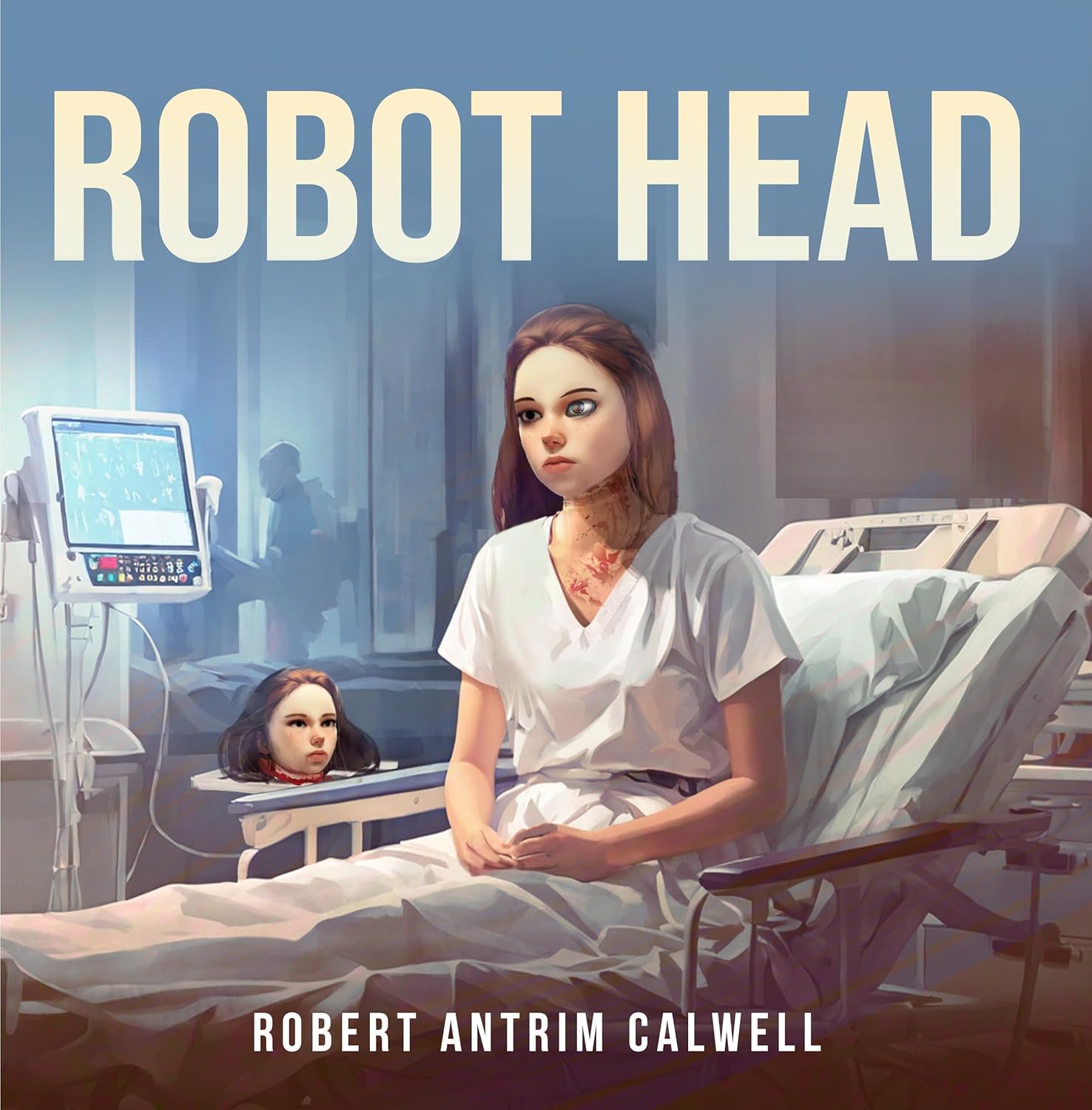
Robot Head by Robert Antrim Calwell takes that voice and places it center stage. It’s not just a sci-fi novel or a nostalgic ode to 1970s rock—it’s a window into the stormy chaos of adolescence, the kind that many adults have tried to forget, but can’t.
The story follows Tiara, a teenage girl whose pain is so overwhelming that she attempts to end her life by carbon monoxide poisoning. The tragedy doesn’t end there. She survives—but is declared brain-dead. Then, in a jarring twist that blends speculative fiction with emotional reality, her parents agree to a radical procedure. A Robot Head is surgically fused to her body, giving her a second chance at life, though not the kind anyone imagined.
Tiara’s post-procedure journey is unsettling, surreal, and deeply human. She’s alive, yet not whole. She thinks, but not like before. Her mind is a battlefield between memory, identity, and the artificial structure now wired into her consciousness. For many adult readers, Tiara’s internal dissonance may evoke an eerie familiarity. That feeling of not belonging—not even in your own skin—isn’t just teenage angst. It’s a memory we carry forward, often unspoken.
Robot Head reflects the reality of mental health struggles many teens face, but its themes echo into adulthood. How many of us remember lying awake, wondering if the thoughts in our head were rational or destructive? How many have felt the need to hide behind emotional armor—our own version of a robotic shell—just to survive the expectations placed on us?
Tiara’s father tells her to “smile and try,” a phrase that echoes the societal demand for resilience, even when someone is barely holding on. Her mother’s love is palpable, but powerless against the storm inside Tiara. These dynamics feel raw because they are real. The book doesn’t just tell a story—it compels us to feel, remember, and reflect.
Reading Robot Head as an adult brings something transformative. It bridges a gap between past and present, between who we were and who we’ve become. For some, it may serve as a catharsis; for others, a wake-up call to reach out to those currently battling their own inner voices.
In the end, Tiara’s odyssey is more than survival—it’s about finding identity beyond damage, and discovering whether we are more than the sum of our scars, synthetic or not.
So, if you once had a voice in your head whispering doubts, or still do—read Robot Head. It may not silence the echoes, but it might help you understand them.