Why are teens all around the globe uncertain about the realities of their lives?
“Robot Head“ by Robert Antrim Calwell is not just a novel—it’s a mind-altering experience that reads like an echo from a lost rock opera, teetering on the edge of despair and resurrection. A poetic and cinematic journey into a teen girl’s fractured psyche, it captures the rhythms of an era while posing haunting questions about identity, mortality, and rebirth in an age of machines.
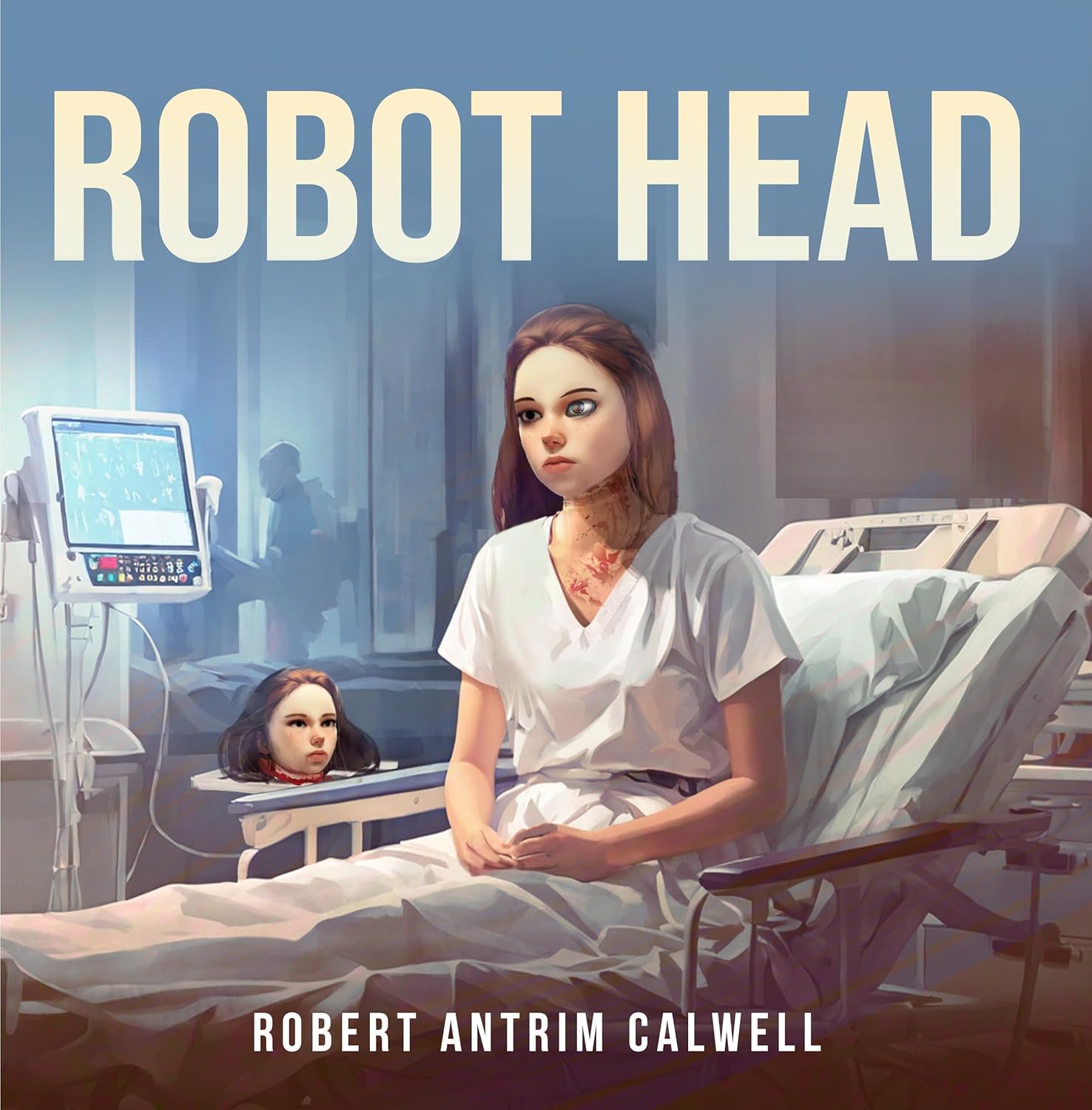
Robot Head begins with the raw intensity of a suicide attempt. Tiara, a teenage girl, closes herself inside a garage with the car engine running, seeking an end to her inner torment. Her story begins not with a bang but with a hiss—the quiet sounds of a ticking clock, muffled breathing, and the ominous growl of the engine. The narrative unfolds like a stage production or an audio drama, with vivid sound effects and dialogue that immediately draw the reader into the scene. The use of auditory cues—skidding tires, sirens, footsteps—transforms the page into a living soundtrack, and you can almost hear the vinyl spinning behind the words.
Tiara is found unconscious and barely clinging to life. The paramedics arrive, too late to reverse the damage but just in time to preserve what remains. When she is declared brain-dead, her parents are faced with an impossible choice: let her body die or allow science to intervene. They choose the latter, consenting to a radical surgical procedure that replaces Tiara’s biological head with a robotic one.
Thus begins the second act of this haunting tale. The transformation isn’t just physical. Robot Head becomes a metaphorical exploration of what it means to lose one’s self, to be severed from your past, yet forced to carry on in a world that no longer feels real. The narrative shifts into speculative terrain, blending psychological realism with sci-fi elements that reflect the anxieties of the post-Vietnam, pre-digital age—a world caught between analog beauty and synthetic nightmares.
Calwell’s writing style is poetic and deeply emotional. He weaves lyrics and soundscapes seamlessly into the story, and Tiara’s inner voice comes alive in a lyrical poem that is both a suicide note and a fragmented diary. Her poetry becomes a heartbeat that continues through the robotic transition, echoing themes of hope, despair, and post-human identity. Tiara’s Robot Head doesn’t signify death, but a strange and painful continuation. She becomes an emblem of lost innocence wrapped in wires—a futuristic Mary Shelley heroine searching for meaning in a world that doesn’t recognize her anymore.
What sets Robot Head apart is its ability to speak to the raw realities of teen life—feelings of isolation, hopelessness, and the desperate longing to be seen. Yet it never glamorizes Tiara’s pain. Instead, it confronts it directly, offering a mirror for readers who have felt similarly unheard or broken. And for fans of classic rock, the book is filled with Easter eggs—echoes of Pink Floyd, The Who, David Bowie, and other icons who explored similar themes of alienation, transformation, and the blurry line between man and machine.
A poetic rock opera in novel form, Robot Head is not for the faint of heart—but it’s essential reading for those willing to stare into the void and find the spark that survives. Whether you’re a fan of rock, speculative fiction, or psychological drama, this book will leave a lasting impression.