When people think of mindfulness, they often picture silent meditation, deep breathing exercises or quiet moments of reflection. Yet mindfulness can take many forms. Sometimes, it is found not in silence, but in story. Not in stillness, but in poetry.
In BONES AND SKULL: The Book of Meditations, author Robert Antrim Calwell offers readers a different path to mindfulness, one guided by imagination, symbolism and poetic reflection. Through a collection of meditations, allegories and lyrical storytelling, the book invites readers to slow down and engage with life’s deepest questions about hope, loss, innocence and redemption.
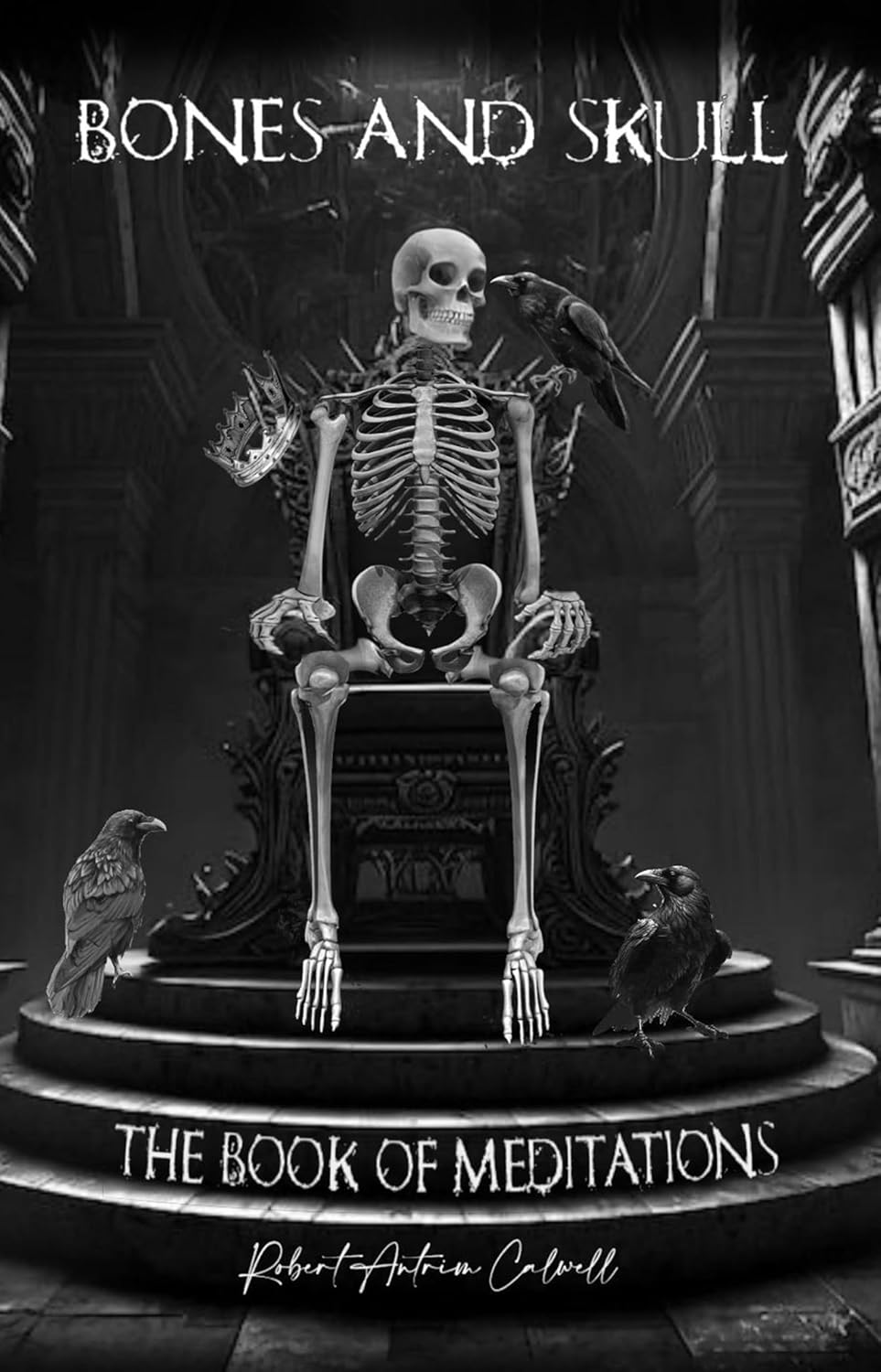
Two of the most memorable pieces in the collection, Every Heart To Pass and Weaver’s Mountain, demonstrate how poetry can become a form of meditation.
Every Heart To Pass opens with a sense of wonder that immediately encourages readers to step outside the rush of everyday life:
Why must the old build many trails,
When Fairies write the book of tales.
Simple Gods watch all that share,
The Children play with little care.
These lines invite us to see the world through a different lens, one that values imagination, kindness and curiosity. In a culture often focused on productivity and speed, the poem reminds us of the importance of slowing down and paying attention to the beauty that surrounds us.
The poem continues with themes of connection, compassion and shared humanity:
Souls will drift as teardrops fall,
Upon thy cheek to hear the call.
To hold the hands of those at last,
Belief in every heart to pass.
This is mindfulness at its core: recognizing our connection to others and approaching life with empathy and awareness.
If Every Heart To Pass represents wonder and reflection, Weaver’s Mountain explores the shadows that all people must face. Set within the mysterious landscape of Teardrop Falls and Weaver’s Mountain, the story follows The Children as they confront fear, loss and ultimately the possibility of redemption.
One of the story’s most striking passages introduces the enigmatic Weaver:
The Weaver lives in mountain’s care,
With Horsenhead, his servant mare.
In dusken light The Children’s steps,
But Weaver’s madness never rests.
The Weaver serves as more than a character. He becomes a symbol of the fears, doubts and destructive thoughts that can entangle the human mind. Yet the story does not leave readers in darkness. Instead, it explores how courage, love and community can overcome even the deepest wounds.
Throughout Weaver’s Mountain, Calwell blends folklore and meditation in a way that encourages readers to reflect on their own lives. The story asks timeless questions: How do we respond to suffering? How do we heal? What does redemption truly mean?
What makes BONES AND SKULL: The Book of Meditations unique is its ability to transform poetry into an experience of mindful contemplation. Rather than offering simple answers, the book creates space for readers to reflect, imagine and discover their own truths.
For anyone seeking a meaningful alternative to traditional mindfulness practices, Robert Antrim Calwell’s work offers a powerful reminder that poetry itself can be a meditation. Through stories like Weaver’s Mountain and poems like Every Heart To Pass, readers are invited to slow down, listen closely and reconnect with the wisdom that often lies hidden beneath the noise of everyday life.
Sometimes the path to mindfulness begins with a single poem and sometimes it begins with BONES AND SKULL.