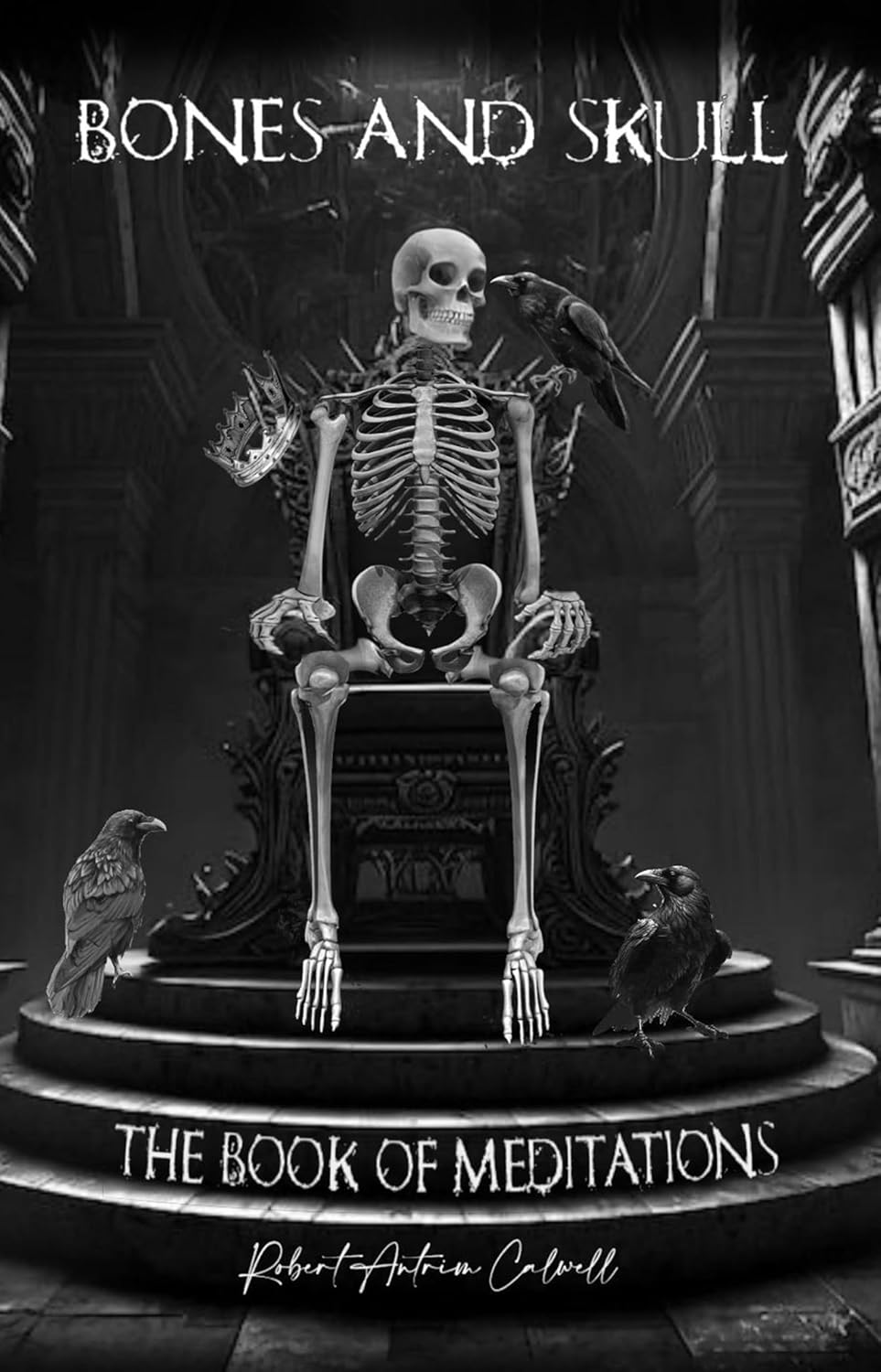
The presence of children in Bones and Skull: The Book of Meditations by Robert Antrim Calwell is more than incidental—it is foundational to the book’s exploration of hope, continuity, and morality. By placing children in a mythic landscape marked by innocence and peril, Calwell creates a narrative that underscores their symbolic role as agents of renewal and bearers of moral truths.
At the heart of the book’s narrative is the mythical setting of Weaver’s Mountain and the nearby Teardrop Falls. These locations are frequented by the Children, who represent innocence untainted by the complexities of adult life. The Children’s world is one of exploration and camaraderie, but it is also shadowed by danger, as exemplified by the ominous figure of the Weaver. The Children’s journeys to and from these places mirror the universal journey from naivety to experience and, ultimately, to wisdom.
One of the most memorable depictions of the Children is their confrontation with the Weaver, a figure who weaves the words and dreams of his victims into literal and figurative bonds. The Children’s brave decision to confront him is an allegory for the moral courage required to overcome fear and corruption. Their victory, achieved through unity and sacrifice, symbolizes the triumph of collective goodness over individual malevolence.
The Children’s relationship with the natural world further reinforces their symbolic role. Their affinity for Teardrop Falls—a site of both beauty and transformation—shows how they embody the cyclical forces of life and renewal. Even their connection to the hanging dwarf crocus, which blooms from the remains of the lost, suggests that the Children carry forward the legacies of those who came before them. This continuity ties the past to the future, affirming the idea that innocence, though vulnerable, has the power to heal and regenerate.
Calwell’s portrayal of the Children also touches on themes of morality. Their chants, such as “If I’m led to wander through, the clover in the sky. March on past thy chosen step, and then to Lullaby,” reflect a deep sense of spirituality and interconnectedness. Their actions, from devising plans to protect each other to their poignant sacrifices, serve as moral guideposts, reminding readers of the enduring importance of community and compassion.
In the end, the Children’s presence in Bones and Skull elevates the narrative from a tale of loss and struggle to one of hope and redemption. Their courage and innocence stand as a beacon, lighting the way through the darkest aspects of the human experience. By grounding the book’s mythic landscape in the actions and symbolism of the Children, Robert Antrim Calwell crafts a story that resonates with timeless truths about the human condition.