Robert Antrim Calwell’s Bones and Skull is a masterful exploration of life’s dualities, weaving light and dark themes into an intricate tapestry of symbolism. Within its pages, the interplay between these opposing forces challenges readers to confront the fragility of existence, the resilience of the human spirit, and the profound truths that lie hidden in the shadows.
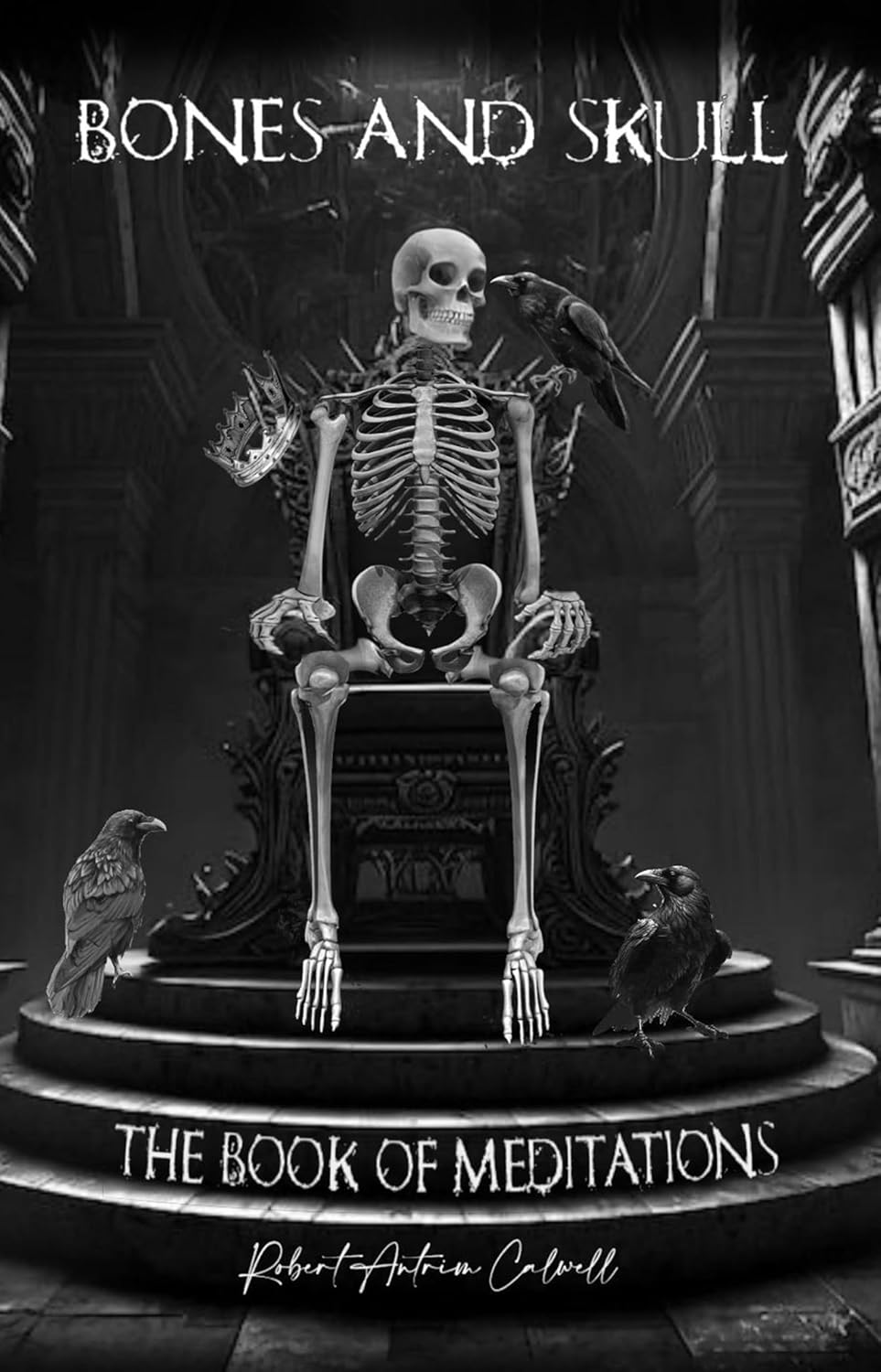
At the heart of this narrative lies Weaver’s Mountain, a place both enchanting and foreboding. The mountain’s lush beauty, with its cascading Teardrop Falls and the serene presence of lilies, contrasts sharply with the chilling menace of The Weaver. This dichotomy—beauty intertwined with terror—symbolizes the coexistence of light and darkness in the human experience. The mountain becomes a metaphor for the inner struggles we all face, where hope battles despair and love defies fear.
The hanging dwarf crocus, a recurring image in the book, serves as one of its most poignant symbols. These delicate flowers, which are said to represent the souls of lost children, sway gently in the breeze, embodying both tragedy and transformation. Their beauty belies the horror of their origin, reminding readers that even in the darkest moments, there is a potential for grace and understanding. The dwarf crocus becomes a lens through which the characters and readers alike view the inevitability of loss and the possibility of redemption.
Light and dark are further contrasted in the figures of The Children and The Weaver. The Children, with their innocence and unyielding hope, represent the light of humanity. Their white garments, stained with the blood of battle, serve as a visual representation of purity tarnished by hardship. Yet, even as their innocence is tested, their resilience and unity shine through, illustrating the enduring power of love and collective strength.
The Weaver, on the other hand, is the embodiment of darkness. His obsessive weaving of twine and rope into the heads of lost children mirrors the way despair can entangle and consume the human spirit. Yet, even The Weaver is not beyond redemption. As the story unfolds, readers catch glimpses of a man who was once filled with light, whose descent into madness and malevolence serves as a cautionary tale about the corrosive power of unaddressed pain and loss.
Calwell’s use of natural elements as symbols adds another layer of depth to the narrative. The ravens, often seen carrying pieces of The Weaver’s twine to build their nests, signify the cycle of life and the transformation of darkness into something constructive. Similarly, Teardrop Falls—where The Children cleanse themselves after their harrowing battle—represents both a physical and spiritual purification, a return to innocence and clarity after enduring the storm.
One of the most compelling aspects of Bones and Skull is its exploration of how light and dark coexist within individuals. Edgar, the courageous First Child, exemplifies this duality. His willingness to confront The Weaver and sacrifice himself for the greater good reveals both his vulnerability and his strength. Edgar’s transformation into a hanging dwarf crocus, while tragic, also symbolizes the enduring legacy of his light, even in the face of overwhelming darkness.
The book’s poetic prose further enhances its symbolic depth, inviting readers to engage with its themes on both an intellectual and emotional level. Phrases like “Severed dreams are held in Heaven” and “The Weaver made the rope of time” evoke a sense of timelessness, encouraging reflection on the broader human condition. These lines suggest that while darkness may obscure our path, light—whether in the form of hope, love, or memory—remains an indomitable force.
Ultimately, Bones and Skull is a meditation on the interplay of light and dark within us all. Calwell’s masterful storytelling reminds us that even in our most shadowed moments, there is beauty to be found and lessons to be learned. Through its rich symbolism, the book challenges us to embrace the dualities of existence and find balance in a world where light and dark are inextricably intertwined. By doing so, it offers not just a story, but a mirror through which we might better understand ourselves and the world around us.