When we speak of mystical poetry—literature that threads the spiritual with the natural, the symbolic with the stark—names like William Blake and Emily Dickinson dominate the conversation. Yet, in Bones and Skull: The Book of Meditations, Robert Antrim Calwell presents a compelling modern entry into this timeless tradition. With his ethereal landscapes, dreamlike allegories, and childlike narrators, Calwell crafts a mythos that feels both ancient and startlingly contemporary. His work deserves study alongside Blake’s Songs of Innocence and Experience and Dickinson’s riddle-like meditations on death and divinity.
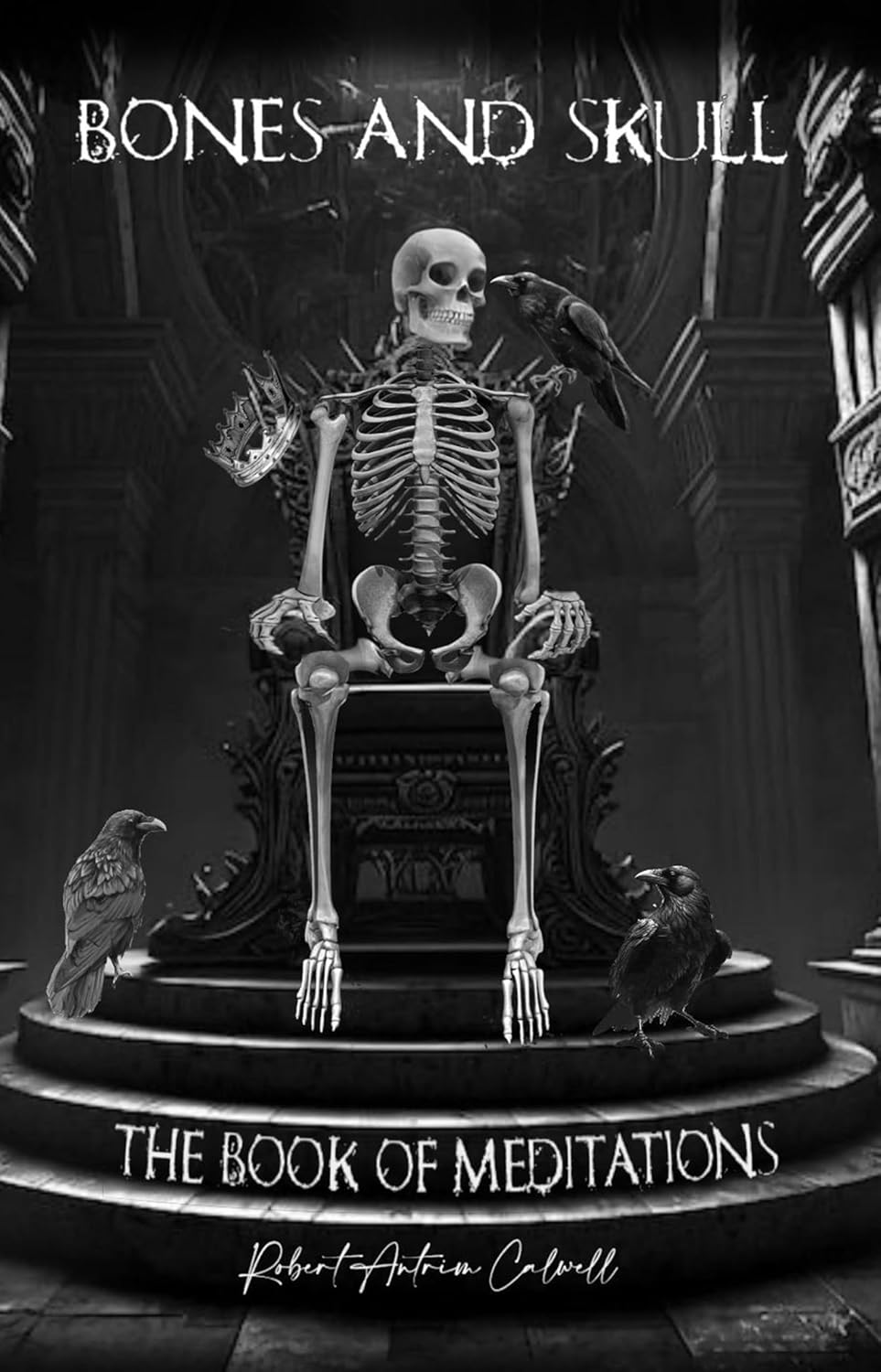
Like Blake, Calwell conjures a mythological universe populated with archetypes. The Children of Tender, The Weaver, Bones and Skull—these figures mirror Blake’s personifications such as Urizen, Los, and the Lamb. Both poets build worlds that reflect inner human conflict. Calwell’s Weaver is not simply a villain, but a fallen father-figure—a symbol of madness born from pain. Similarly, Blake’s tyrants are often failed aspects of the divine. Calwell explores the duality of darkness and innocence in much the same way Blake did, portraying children as spiritual warriors who confront horror not with violence alone, but with love, ritual, and unity.
In terms of form and tone, Calwell often echoes Dickinson’s fragmented, elliptical voice. His poems are structured with short, musical lines—many composed in quatrains or couplets, much like Dickinson’s—imbued with spiritual longing, grief, and wonder. Both poets deal in riddles and metaphor, using small domestic symbols (a crocus, a rope, a stairway) to explore cosmic truths. Dickinson writes, “I heard a Fly buzz – when I died –,” and in Calwell’s world, children whisper lullabies while burying monsters, their white outfits stained with blood and forgiveness. The intimacy of death and rebirth, the faith in unseen forces, the quiet defiance against despair—these are shared spiritual idioms.
But Calwell’s voice is not simply imitative. What sets him apart is his ability to channel deep spiritual conflict through a narrative arc that feels both ancient and current. He tackles generational trauma, madness, childlike wonder, ecological ruin, and the longing for spiritual redemption without ever sacrificing poetic beauty. His use of mythic geography—Teardrop Falls, Weaver’s Mountain, Bunny Lake—grounds the emotional weight of the book in places that seem half-real, half-dream, much like Dickinson’s Amherst or Blake’s Jerusalem.
Teaching Bones and Skull alongside Blake and Dickinson would open students to a rich discussion about the continuity of mystical literature. Where Blake painted visions of a fractured divine order and Dickinson wrestled with spiritual solitude, Calwell weaves a modern tale of community healing through poetic narrative. Each poet wrestles with God in their own way. Calwell’s children seek salvation not through rigid dogma, but by choosing compassion over fear, and storytelling over silence.
Furthermore, Calwell’s poetic voice is a valuable tool for exploring how contemporary writers can revitalize spiritual and symbolic traditions in a way that resonates with present-day readers. His work speaks to those who have grown up in broken homes, uncertain worlds, or with inherited grief. Like Blake and Dickinson, he reminds us that poetry can be both witness and sanctuary.
In a time when much of literature studies moves toward the overtly political or literal, Calwell’s Bones and Skull reminds us of the power of myth, metaphor, and meditation. It belongs in classrooms and on syllabi that seek to engage the heart, the spirit, and the imagination. The book’s pages hold not only stories but sacred rituals—of remembrance, resistance, and return. It is the work of a poet who, like Blake and Dickinson before him, knows how to see the world not just as it is, but as it aches to be.