SKULL
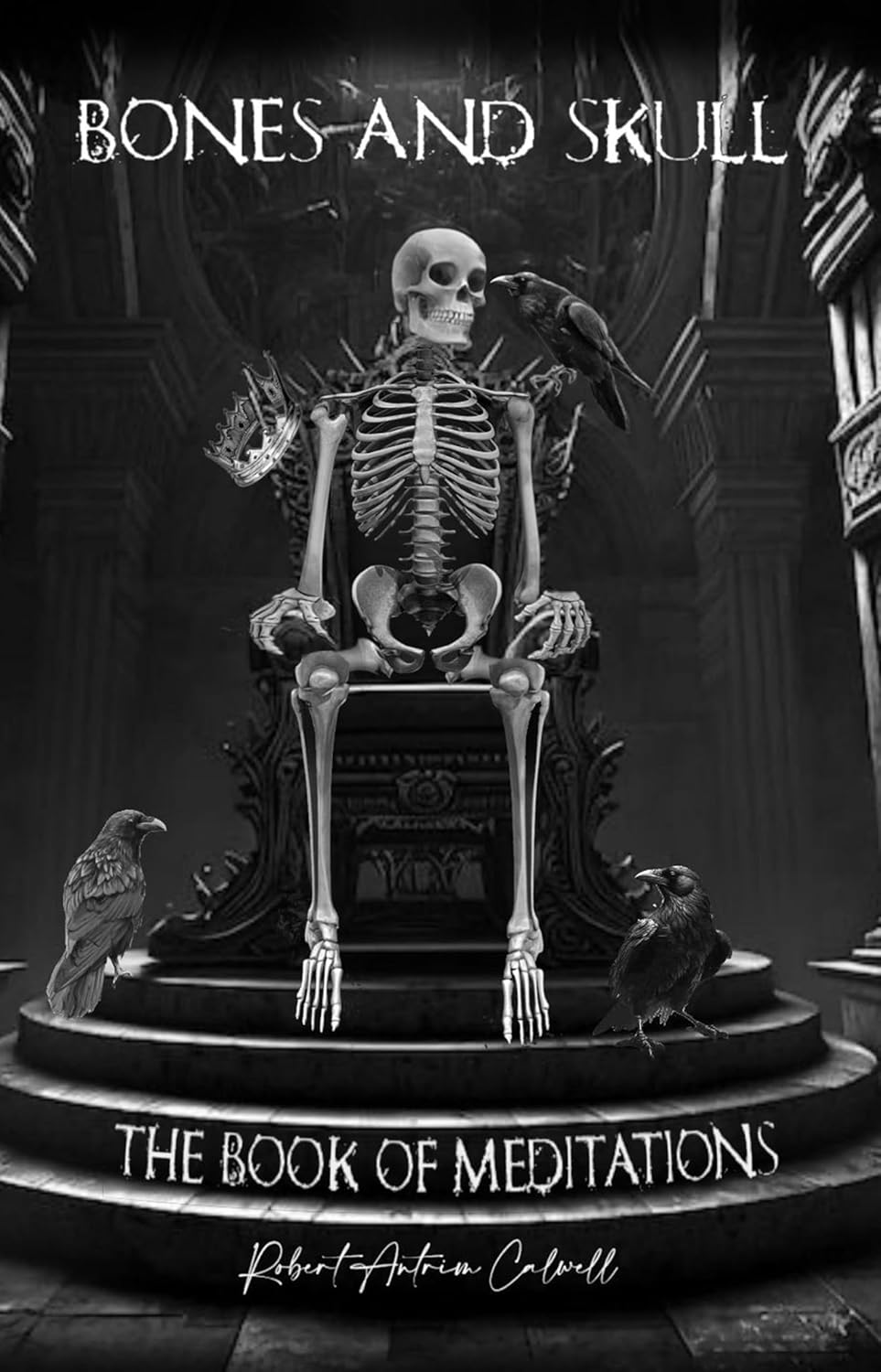
There’s a certain kind of poem that lingers—not because of what it says, but because of what it awakens. Robert Antrim Calwell’s “Nevermore,” from his poetic and grimly enchanting book BONES AND SKULL: The Book of Meditations, is one such spellbound work. Mysterious, surreal, and emotionally rich, this poem is more than just language on a page—it’s an invitation into another world.
The poem opens with an angelic whisper: “There’s a little saint, In everyone you find.” Immediately, Calwell softens the reader’s heart, setting the stage for a journey that is both spiritual and spectral. But don’t be fooled. “Nevermore” doesn’t stay in the light for long. The descent is quick, moving into the dark undercurrents of trepidation, war, and inner torment.
So how does a poem like this mesmerize? It’s all in the dance between opposites. Calwell balances emotional weight with dreamlike visuals. We see bridges drenched in blood, bunkers hiding tears, and children traveling westward like spirits on a pilgrimage. He lets readers glimpse innocence through stained glass windows—shattered but still refracting light.
The poem hints at places—“Luscombe down to Duncairn”—that sound real but feel imagined. It’s as if the poem is unfolding in a parallel world, tethered just barely to our own. The children who travel aren’t just characters; they’re archetypes. They represent spiritual innocence, the last vestiges of purity in a corrupted world. And their journey westward? Perhaps it’s an escape, or maybe a crossing into eternity.
What’s haunting is that these children, full of purpose and clarity, don’t return with what they were seeking. The line “Nevermore what they went for” is a masterstroke of poetic finality. It’s ambiguous, yet complete. You’re left wondering: Did they lose their innocence or transcend it? Did they find truth or abandon illusion?
As part of a larger grim fairy tale, “Nevermore” thrives in its atmosphere of eerie stillness. It feels like something you’d find carved on a tree in a ghostly forest or whispered by a forgotten storyteller. It mesmerizes not because it’s obvious, but because it’s not. It leaves space for reflection, space for discomfort, space for growth.
That’s what makes Calwell’s poetry in BONES AND SKULL so magnetic. He doesn’t lead you by the hand; he beckons you from a distance, challenging you to walk the foggy path. “Nevermore” is a poem for the soul’s darker nights, and in reading it, we emerge a little more haunted, a little more awakened.
If you’re a reader drawn to poetic works that disturb in the best way—works that nudge you toward deeper questions—then let “Nevermore” be your guide. It’s not just a poem. It’s a portal. And once you step through, you may never return unchanged.