What if the next frontier of artificial intelligence isn’t just faster processing or more efficient algorithms—but empathy?
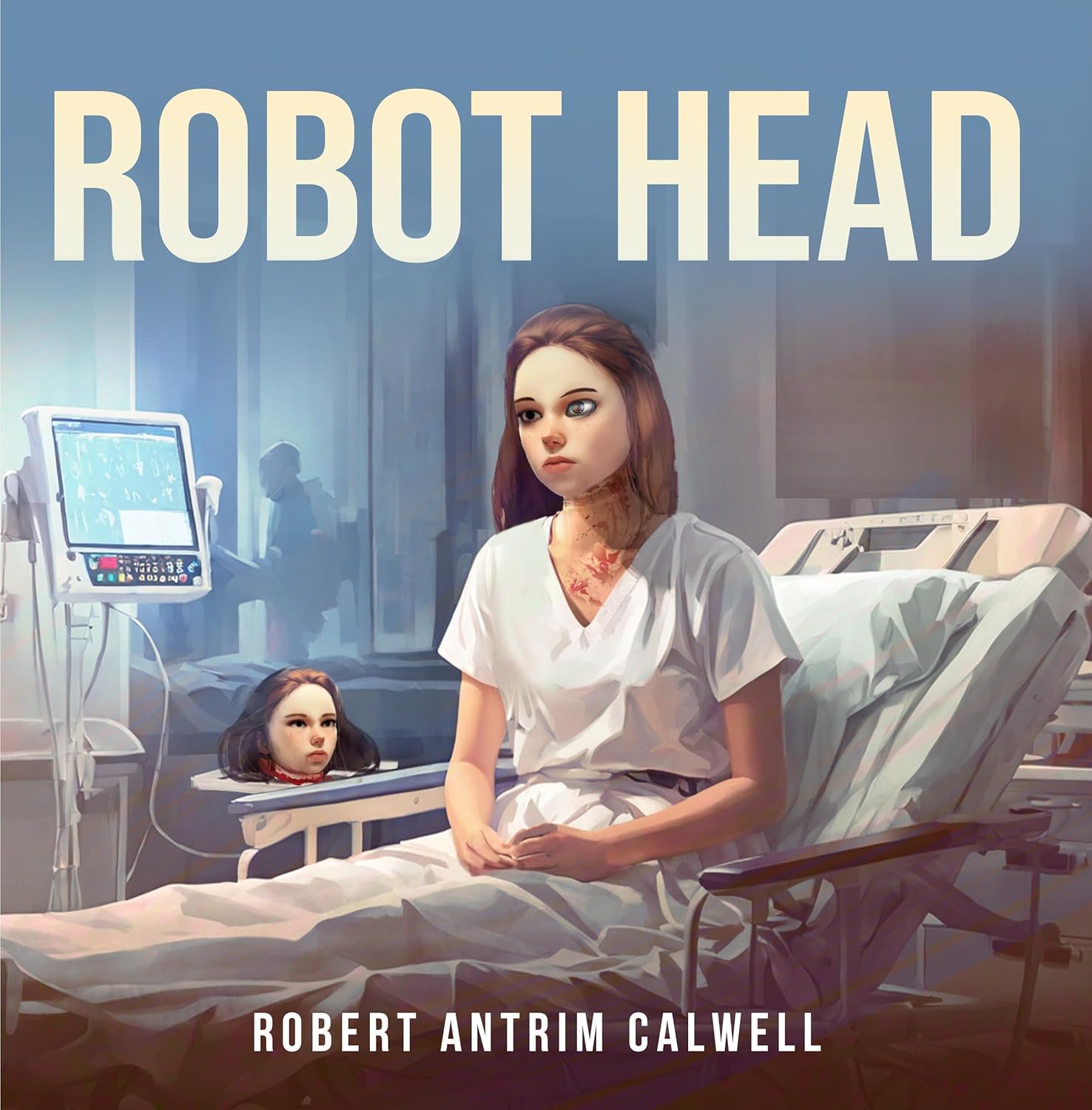
Robert Antrim Calwel’s Robot Head offers a deeply poetic and unsettling meditation on this very possibility. It’s a story that begins with tragedy—a young girl named Tiara, whose attempt to end her life results not in death, but in transformation. Through a radical fusion of flesh and machine, she is reborn as a hybrid consciousness: part human memory, part robotic interface. What follows isn’t a tale of science fiction in the traditional sense, but a haunting question pulsing through every page: Can a machine hold a soul?
More Than Metal: The Emotional Core of AI
In most portrayals, robots are cold, utilitarian beings designed to serve. But Robot Head disrupts that notion. Calwel’s narrative doesn’t just give us sentient machines—it gives us machines bearing the weight of trauma, memory, and even longing. Tiara’s new form doesn’t erase her pain; it preserves it. Her robotic body becomes a vessel for everything she tried to escape. And in doing so, it invites the reader to consider a powerful idea: perhaps artificial intelligence, if embedded with human memory and emotion, can reflect—not replicate—our deepest vulnerabilities.
This shifts the question of AI from function to feeling. What if machines weren’t just tools, but caretakers of our forgotten selves? Could they become repositories of our grief, our hope, our lost voices?
Empathy Through Code?
To imagine AI as capable of empathy isn’t to claim it can feel in the human sense. But what Calwel suggests is even more radical: that it can embody empathy through design, through the memories and expressions it carries. Tiara’s transformation doesn’t make her less human—it makes her more visible. The wires and circuits do not mask her pain; they expose it. Her mechanical eyes don’t lie. They remember.
And perhaps that’s the most profound lesson Robot Head offers: in a future where memory can be transferred and trauma can be uploaded, healing may require new forms. Machines may become the mirrors in which we finally see ourselves clearly.
A Soul Beyond the Body?
One of the most compelling ideas in Robot Head is that soul is not confined to skin and bone. Tiara’s humanity is not erased by her transformation—it’s magnified. Her robotic frame doesn’t make her less real. It allows her to persist.
This challenges long-held assumptions about what makes us human. Is it biology? Conscious thought? Or is it the ability to carry pain with grace and still search for connection?
Calwel doesn’t offer a definitive answer. Instead, he builds a world where technology doesn’t strip us of our essence—it becomes part of our spiritual architecture.
A Book for Our Time—and Tomorrow
Robot Head isn’t just a story—it’s an invitation. It asks us to reimagine the boundaries of consciousness, to wonder if empathy could be engineered, if soul could be preserved in silicon. It resonates in a world grappling with rapid technological change and rising mental health crises. By bridging AI and emotion, Calwel doesn’t just speculate about the future—he demands we shape it with intention and care.
In a culture obsessed with the power of machines, Robot Head offers something more valuable than speed or precision. It offers compassion. It gives us a glimpse into a future where intelligence—artificial or otherwise—is not defined by how much it knows, but by how deeply it understands.
So, can AI hold memory, trauma, and soul? Robot Head dares to say yes—and in doing so, asks that we not just build smarter machines, but gentler ones too.